
Hancock County Probate Court Role
Probate in Hancock County is handled inside the local court system, not by a separate probate court with a separate clerk. The official Hancock Circuit Court page states that the Circuit Court handles probate along with criminal, civil, juvenile, and domestic relations cases. The Hancock Superior Court I page also lists estates among the matters it hears, so the case caption and MyCase result should be checked before assuming which courtroom controls a specific estate file.
The practical record path is simple. Search public probate case information online first, then request official copies from the Clerk of the Circuit Court / County Clerk. The clerk maintains the court record, collects court fees, certifies copies, and processes written requests through the Public Access Department. Probate case records may show public entries, but protected-person data, minor information, medical facts, and certain financial details can be limited by Indiana access rules.
The county courthouse layout helps route probate questions. The clerk counter is in room 213, the Circuit Court is in room 302, Superior Court I is in room 303, and Superior Court II is in room 217. Estate users should not contact the sheriff for probate records; sheriff records are separate law-enforcement files.
Hancock County Probate Terms
Probate records use short terms that can change the meaning of a filing. These definitions are plain-language reading aids for the words most likely to appear in Hancock County estate, guardianship, trust, and will records.
- Testator
- The person who made a will before death.
- Executor
- The person named in a will to carry out estate duties, often called a personal representative in court records.
- Intestate
- A death without a valid will, which usually means state law controls who may inherit.
- Guardianship
- A court case asking for authority to act for a minor or incapacitated adult.
- Conservatorship
- A protective arrangement for property or finances. Indiana records in this research use guardianship as the local court category.
Search Hancock County Probate Records
Public estate and guardianship case information may be searched through Indiana MyCase. The Indiana Judicial Branch says MyCase is a public access service for non-confidential case information and many public documents, but it is not the official court record. Official certified copies and certified probate letters must come from the court that maintains the file, which in Hancock County means working through the clerk.
- Start in MyCase and search by case number if it is known. Estate and guardianship users can also search by decedent, estate name, petitioner, guardian, attorney, or party name.
- Use the county or court filter for Hancock County when the portal offers it. Look for Hancock Circuit Court or the assigned superior court on the case summary.
- Open the case result and review the case type, filing date, status, court, parties, attorney, chronological case summary, orders, hearing entries, and available documents.
- For certified letters, certified orders, unavailable documents, or older files, submit the county Request for Information form to the clerk with the proper fee and return envelope if using mail.
- If a guardianship or protected-person record is restricted, be prepared to show party status and photo identification before the clerk can provide information.
Note: Closed probate files may be stored off-site, so the clerk's form warns that a file may not be available until the next business day.
Hancock County Probate Contacts
The probate contact points are the assigned court and the clerk's Public Access Department. Court staff can direct courtroom issues, while the clerk is the copy, certification, and record-request office. All listed courtrooms are in the same Greenfield courthouse.
Hancock Circuit Court
9 E Main Street, Room 302
Greenfield, IN 46140
317-477-1107
Monday-Friday, 8 a.m.-4 p.m.
Hancock Superior Court I
9 E Main Street, Room 303
Greenfield, IN 46140
317-477-1148
Monday-Friday, 8 a.m.-4 p.m.
Hancock County Clerk
9 E Main Street, Room 213
Greenfield, IN 46140
317-477-1109
Monday-Friday, 8 a.m.-4 p.m.
Hancock County Probate Fees
The Hancock County fee schedule lists estate, guardianship, trust, copy, and certification amounts. Probate filing fees depend on the case category and service method, while record-copy fees are charged by the clerk when a user requests paper or certified documents.
| Probate item | Code | Fee |
|---|---|---|
| Estate, supervised or unsupervised, including small estate affidavit | ES / EU | $177 certified mail / $205 sheriff |
| Estate, spread will of record / inheritance tax return | EM | No specific fee shown in schedule text |
| Guardianship | GU | $177 |
| Trust | TR | $177 |
| Additional certified copies of letters | n/a | $2 |
| Document certification | n/a | $3 per document |
| Clerk record document copy | n/a | $1 per page |
Written copy requests should use a money order when mailed. The clerk's public-records instructions also call for a self-addressed stamped envelope, which matters when requesting certified letters after appointment as representative or guardian.
What Hancock County Probate Records Show
Hancock County probate records can include the case number, case type, assigned court, filing date, status, estate caption, decedent or protected person, petitioner, personal representative, guardian, attorney, orders, letters, notices, claims, inventory, accounting, hearing entries, and final orders. A small estate affidavit, supervised estate, unsupervised estate, trust, and guardianship will not all show the same fields, so users should read the case type first.
| Field | What it shows |
|---|---|
| Case code | ES, EU, EM, GU, or TR where reflected in the local coding. |
| Court | Hancock Circuit Court or the assigned superior court. |
| Parties | Decedent, estate, petitioner, personal representative, guardian, protected person, attorney, or interested party. |
| Orders and letters | Appointment orders, letters testamentary, letters of administration, or guardianship letters. |
| Docket entries | Inventory, accounting, claims, notices, hearing dates, continuances, and closing orders. |
The U.S. Bankruptcy Court for the Southern District of Indiana is a separate federal court, but it may matter when estate assets or debts involve a federal bankruptcy case.
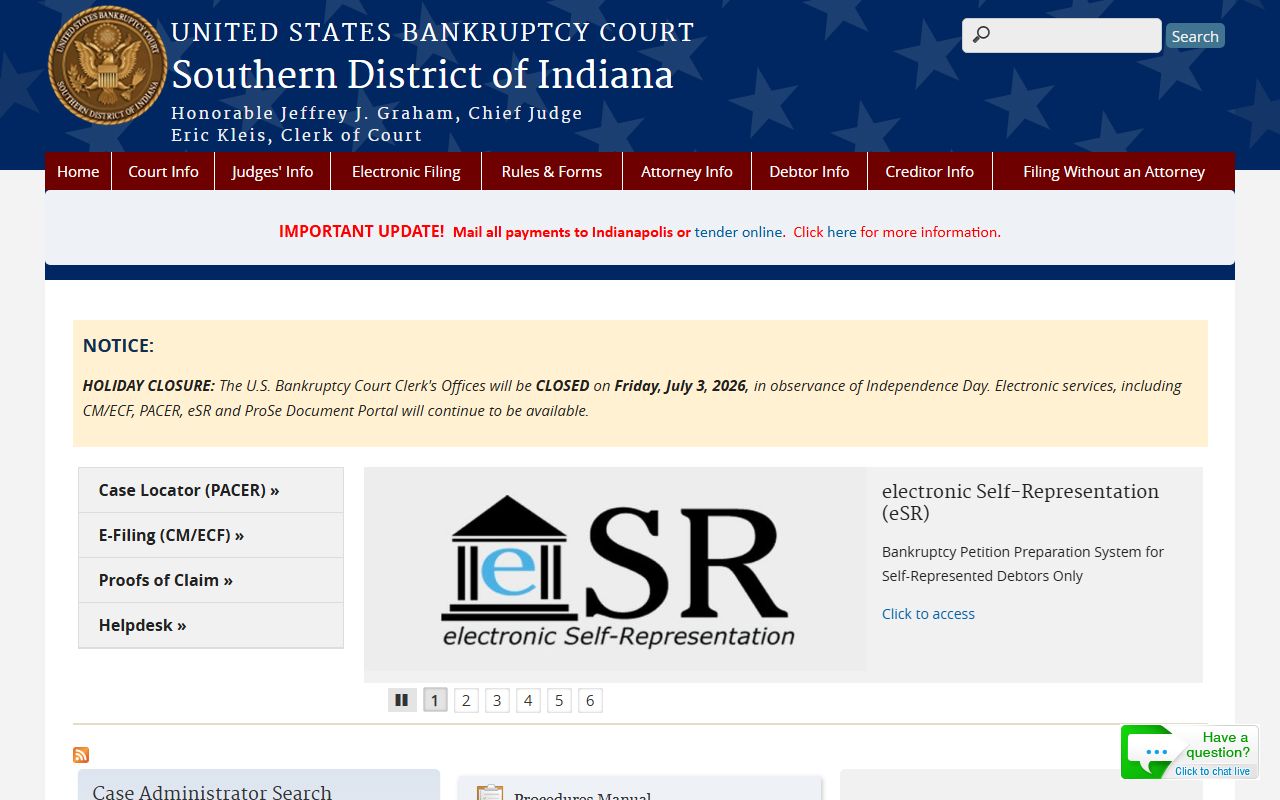
Bankruptcy records are not issued by the Hancock County Clerk, so the local probate file and any federal bankruptcy docket must be searched through different court systems.
Probate Records and Federal Courts
Most Hancock County probate records are local state-court records, but estate research can cross into federal court when bankruptcy, federal civil claims, or an appeal from a federal case is part of the background. The U.S. District Court for the Southern District of Indiana handles federal civil and criminal matters for the region, while probate appointment, estate administration, guardianship, and certified probate letters remain local county court matters.
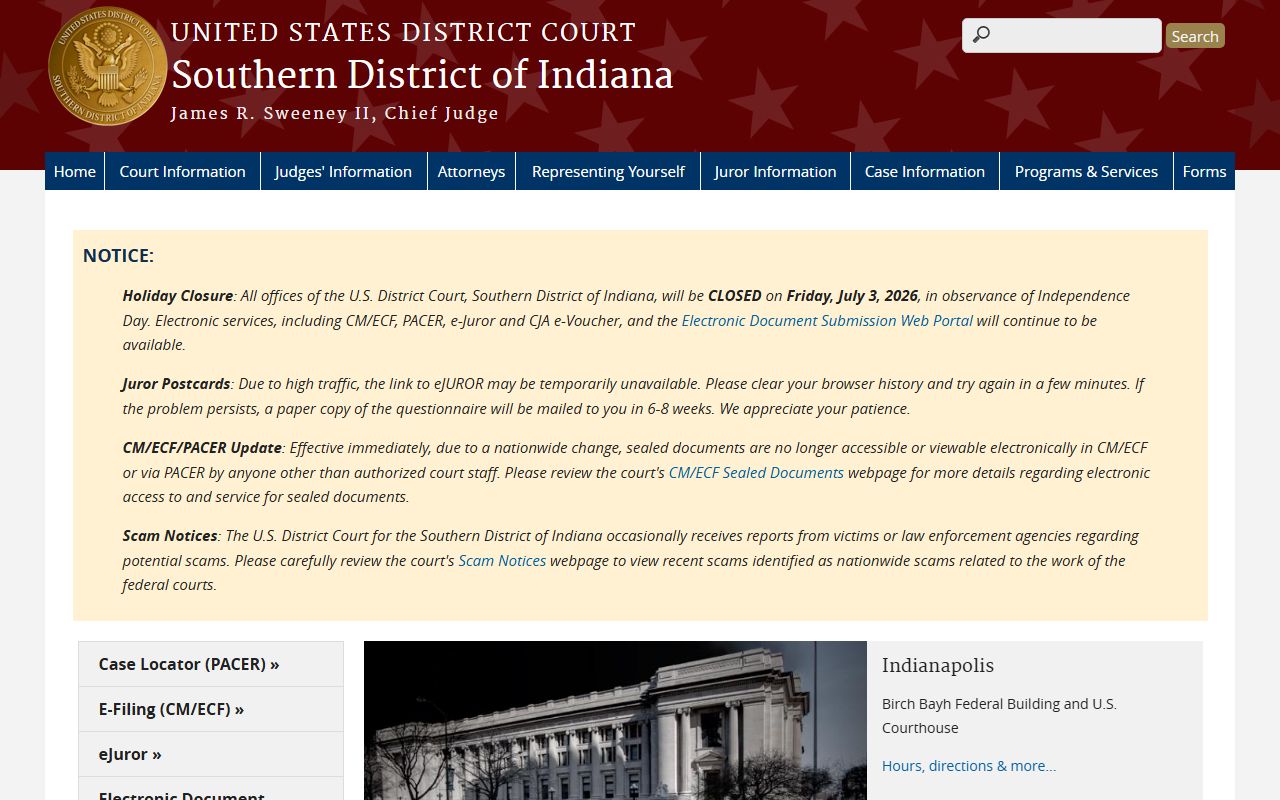
This distinction helps avoid a common request error: the county clerk can certify Hancock County probate papers, but not federal district or bankruptcy court documents.
For federal bankruptcy docket access, the PACER Southern District bankruptcy lookup lists federal filing and access information for the bankruptcy court.
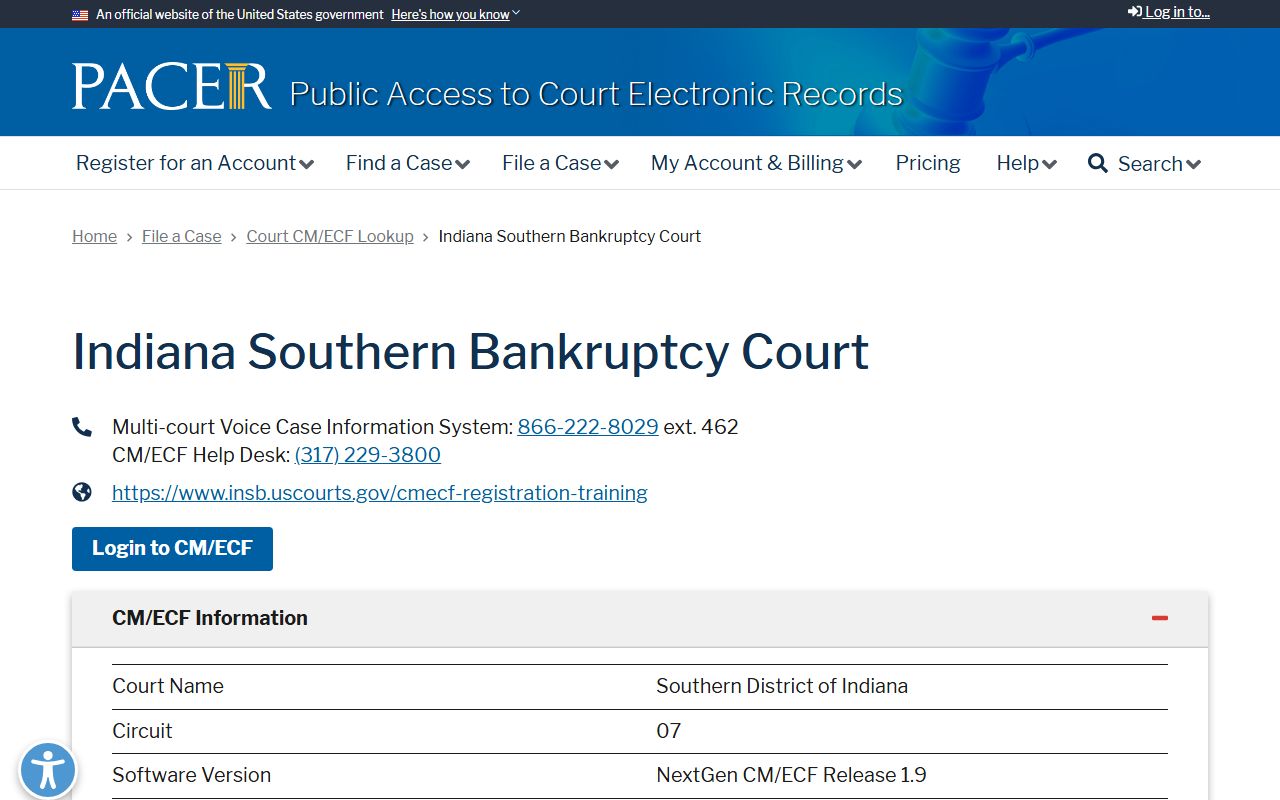
PACER records are federal electronic records. They do not replace MyCase or the Hancock County clerk's certified-copy process for local probate files.
Restricted Hancock County Probate Records
Probate is often public, but guardianship and protected-person matters can include information that should not be open to every public searcher. Indiana Access to Court Records rules may restrict medical, minor, financial, and personal identifier information. The county public-records page also makes clear that confidential court cases require party status and photo identification before information is released.
For a guardianship file, expect redactions or limits on reports, evaluations, protected-person details, and financial account data. For an estate file, public entries may still be available while certain documents are withheld or redacted. Certified letters, certified orders, and complete paper copies should be requested from the clerk because MyCase public access is a service view, not the certified record.